Travel Details
Getting there
Flying into Bali
The most challenging part about traveling to Bali is just getting there! No matter where in the US you leave from, it’s a long journey. The best flights from the Portland area follow the flight plan:
PDX (Portland) to SEA (Seattle) - flight time about 40 minutes
SEA to ICN (Seoul, South Korea) - flight time about 12 hours
ICN to DPS (Denpasar, Bali) - flight time about 7 hours
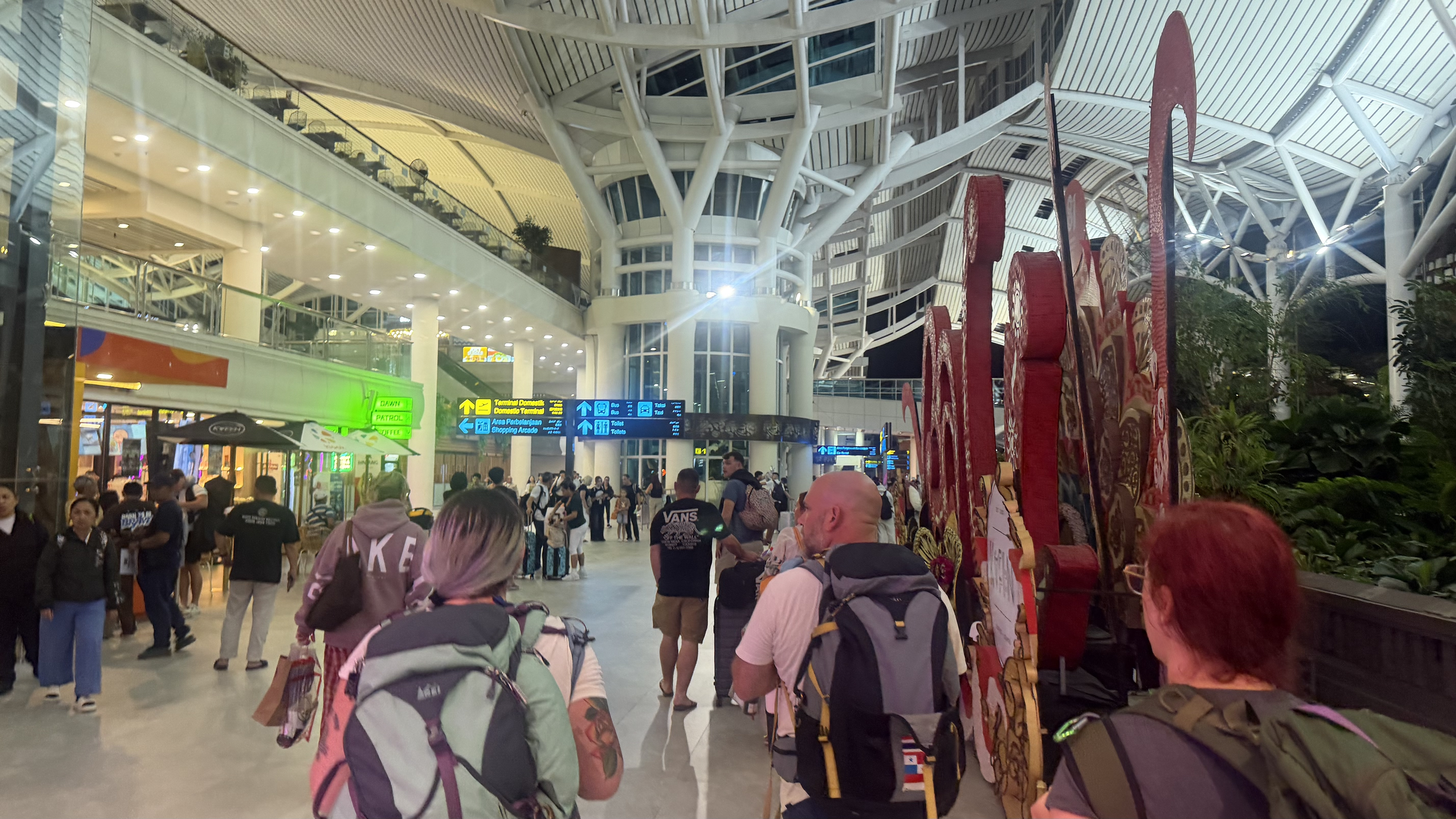
*Flight times do not include layovers. All together its not unusual for the entire journey to take a full 24-30 hours! You will be crossing over the international date line and skipping a day ahead, as Bali is about 15-16 hours ahead of Pacific Time Zone. So if you want to land in Bali the night of June 1st, you need to board your flight out of the US on May 30th. Flights typically are landing at night, but don’t worry taxis and ride shares are still plentiful. We will have someone at a staging area near Denpasar on standby to get your haggard ass refreshed and on to Ubud!
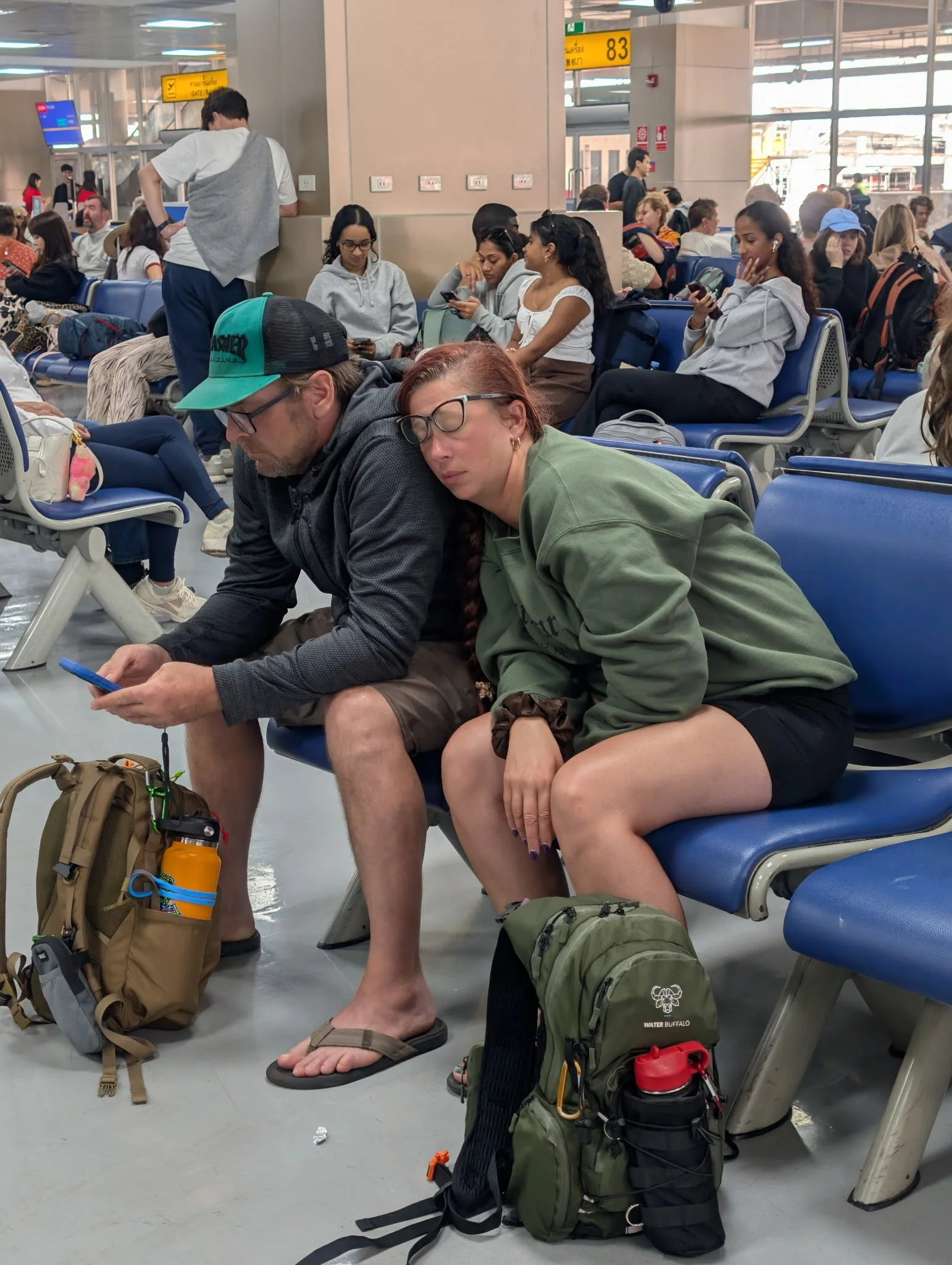
** Pro tip - Flying the friendly skies gets even friendlier when Xanex is on board! Visas
Visas are required to enter Bali, a 30 day e-VOA (electronic Visa On Arrival) can be applied for online easily. We would recommend doing this the day before departure, and take screenshots of it afterwards, just in case you have a hard time opening the download or email while at the airport. You will also need to do an arrival card, which can also be done before departure. E-visas and arrival cards can be filled out here:
Traveling by car
Getting around Bali is very easy after you land. Grab is the SE Asia version of Uber, and they can get you around Bali or the rest of Indonesia plus Vietnam, Cambodia, Thailand, the Philippines, Malaysia, Singapore and Myanmar. It is advisable to download the app, create your account and connect payment methods before you leave! Private drivers for tours and excursions are easily found as well, we will have a list of suggested drivers posted in our WhatsApp group. For the wedding day we will hire some vans to shuttle us between venues. We probably hire the same set up to take us from Ubud to the coast….
Moving to the Gili Islands
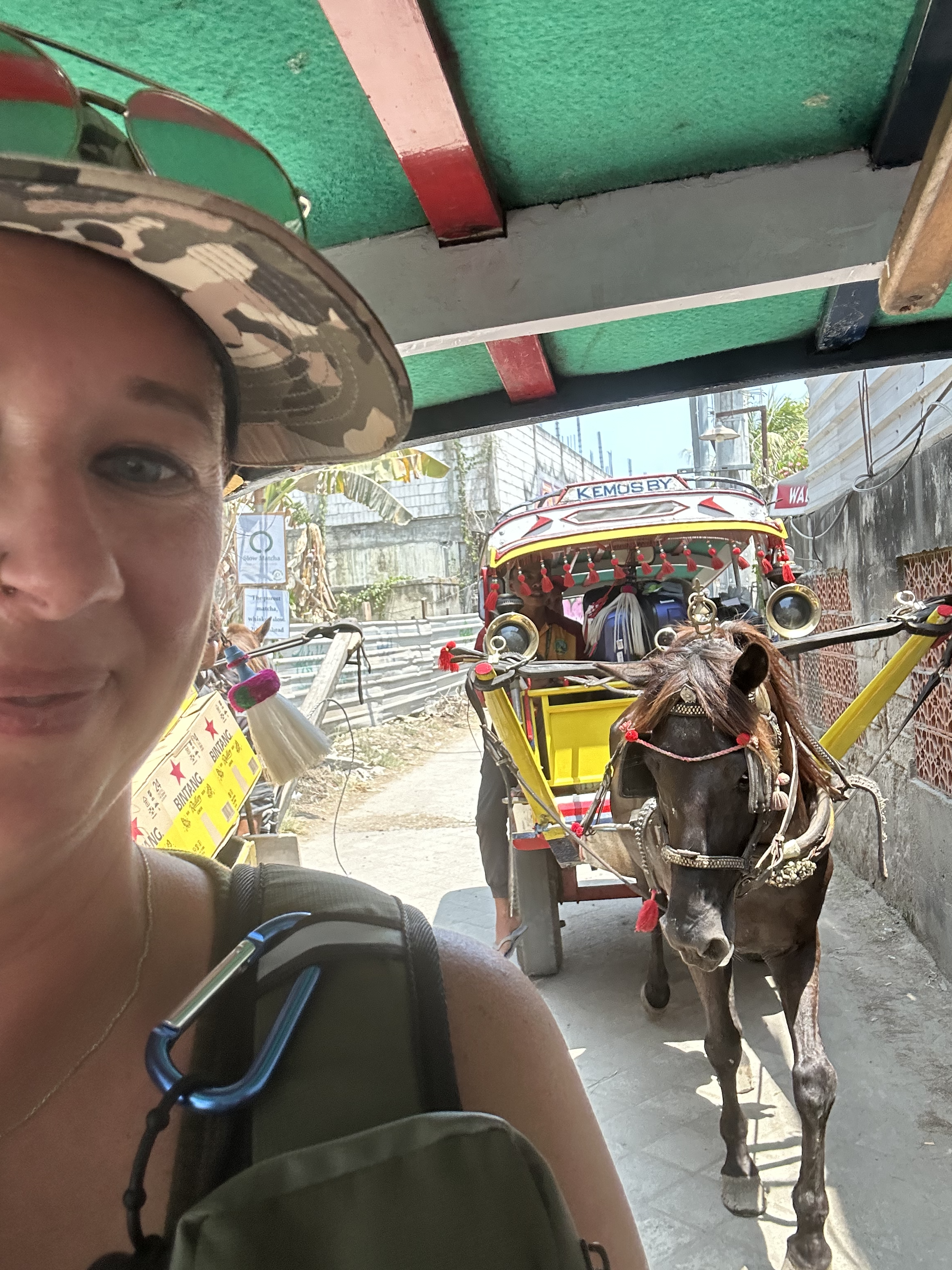
We plan on leaving Ubud on the 8th, and heading to Gili Air for some island time! To get there we will have some private shuttles leaving Ubud in the early morning to make the 1-1 ½ hour drive from Ubud to Padang Bai. The boats leave Padang Bai from 8-11am, fast boats can make the crossing to the island in about 2 hours depending on ocean conditions. Some boats and ocean conditions require you to get in the water and walk for a bit with your luggage, keep this in mind while packing! The shuttles and ferries to Gili Air will be the last group travel plans we make. After a few days we will be leaving Air and heading off somewhere else, anyone who wants to keep traveling with us is welcome to! We highly encourage you to branch out on your own and travel to other areas in the region, ask us if you want any recommendations!

Important Bali info, tips and suggestions.
E - sim and cell service
If your phone is unlocked it’s simple and inexpensive to get an e-sim so that you can retain full service if you should choose it. We usually opt for a data only plan, as we feel calls and texts are unnecessary (and unwanted while on vacation!). The last two trips we have used an app called Airalo and it’s served us well. On our last trip we did an All-Asia (18 countries) 15 day 10GB plan for $24usd and that was more than enough, neither one of us used it all up, and if we had it’s easy to top off the plan. If using something like this make sure you install and purchase everything before you leave, screenshot instructions for turning it on (and turning your phone carrier off) so you won’t have any trouble getting it activated after landing. If you don’t have an unlocked phone you will have to talk to your provider about your options. Most hotels nowadays have fast enough wifi that if you wanted to forgo having any connectivity at all you would probably be fine!
Local Language
On mainland Bali the primary language spoken is Balinese, though Indonesian (Bahasa Indonesian) is also widely spoken. In most tourist areas English is also widely used, though there may be more limitations and some hospitality workers only know enough to get by with the basics. It’s helpful to drop slang and metaphorical phrases when speaking. At the minimum learning to say “thank you” in the native language is great way to show a little respect.
Balinese: Suksma — Thank you!
Balinese: Suksma mewali — You’re welcome! (not as common as sama-sama)
Indonesian: Terima kasih — Thank you!
Indonesian: Sama-sama — You’re welcome!
When it comes to ordering food most menus in the areas we are traveling will have the Indonesian names, with english descriptions. To help here are some common translations:
Ayam = chicken
Babi = pork
Bebek = duck
Sapi = beef
Ikan = fish
Nasi = rice
Mie = noodles
Goreng = fried
Rendang = slow cooked, heavily spiced (not spicy just concentrated flavor and incredibly delicious!)
Bali Belly
Really the term Bali Belly is just the regionally specific slang for travelers diarrhea. Most often this is transmitted through a bacterial, viral or parasitic pathogen contamination in food/water. Often our bodies will react much more severely to these pathogens as we have not spent our lifetimes being exposed to them. If you contract bali belly you can expect about 24 hours of extreme gastric distress (vomiting and/or diarrhea) before it passes through your system. Most cases don’t require medical intervention, just rest, stay hydrated and keep food intake bland and minimal. Prevention is the best medicine though! Basic food safety matters, and hot food carries a much lower risk than cold foods. But don’t let that stop you from enjoying the food, even the fresh fruit!
Water/Ice
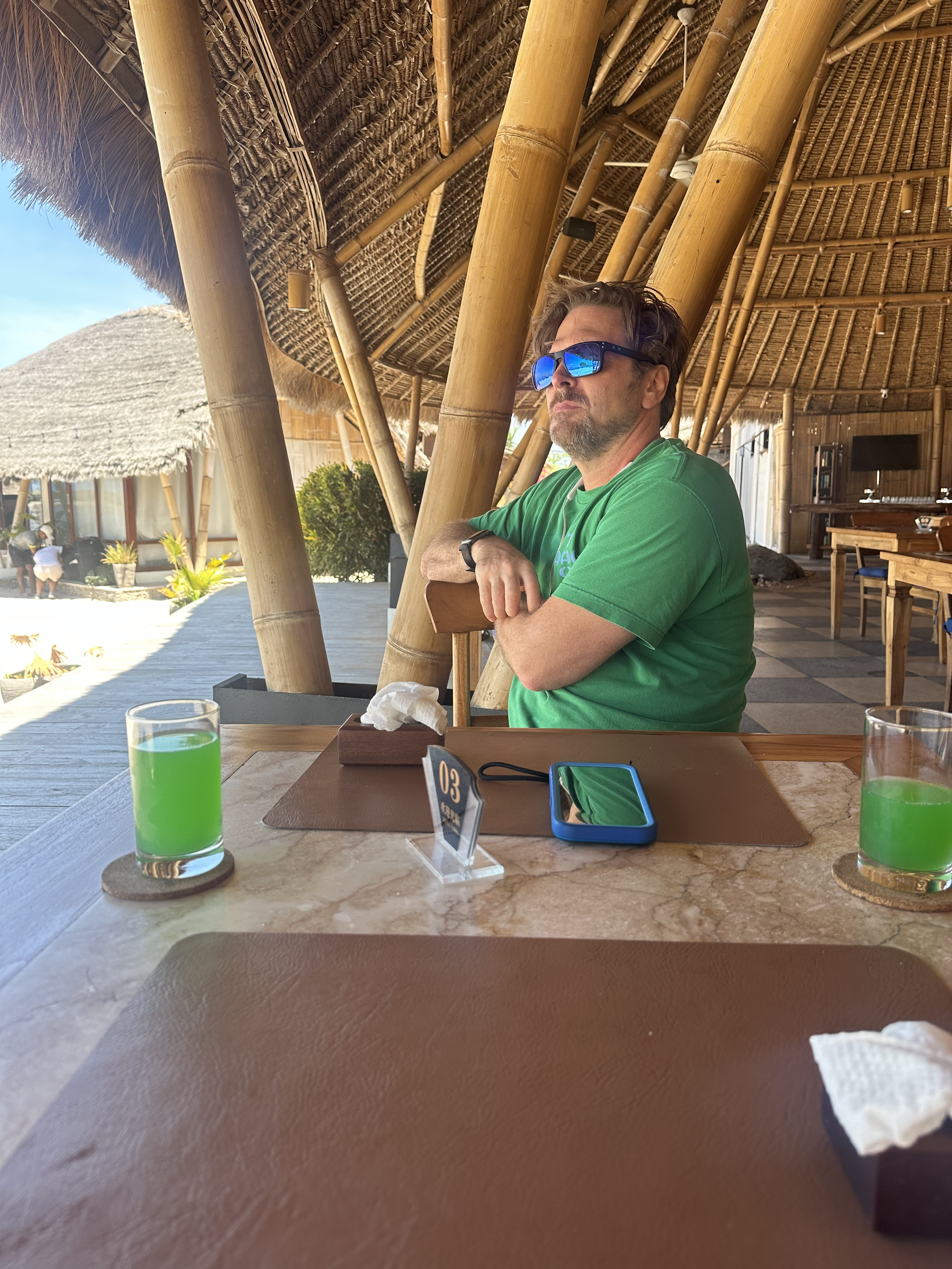
It is not advisable to drink the tap water, but bottled water is available easily though markets and convenience stores. Most restaurants will serve bottled water as well, though they may not be cooking with it. This is especially true in the high tourism areas, but as you venture further out it may become less common. If you want to be extra cautious you can also brush your teeth with bottled water, just to make sure. Ice isn’t always a given everywhere you go, but most ice will be commercially made and should be safe. If you are ever skeptical you can always ask if the water/ice is purified.
Shopping
There is no lack of shopping opportunities every where we will go! “Art markets” are common and a collection of stalls to browse through containing all manner of goodies, haggling is expected to get the best price! There are also streets lined with traditional storefronts and boutique galleries, expect to pay higher prices in the storefronts and some may not be as open to haggling.
A note on haggling prices - Through SE Asia haggling prices is not only common, its expected. Shop owners list their prices higher than what’s needed in the expectation that they will lower them for customers. Haggling is not rude, but there is some unspoken etiquette! #1 - Don’t get mad, upset or emotional when haggling, keep your conversation polite, and to the point. #2 - When making your first offer you can go as low as 40-50% less than the listed price, offering lower may come across as rude and cheap, don’t do it. #3 - If the shopkeeper does not have good english (and sometimes even if they do) haggling may be done on a calculator, if a shopkeeper hands you a calculator the number they’ve typed in is the asking price, you can clear the calculator and enter in your starting offer, then hand the calculator back, pass back and forth until you come to a number you both agree on. #4 - A good haggle is one where both parties have moved at least a little bit, always be willing to come up from your starting offer, and know when to stop! Understand the conversion rate enough to know when you are haggling over a minimal difference, there comes a point where it’s a waste of time to try and get another $.50 lower. If you can’t come to a price you like, thank them and walk away. #5 Haggling is never done in restaurants or for food - don’t try it.
Exchange rates
All of Bali and Indonesia uses the currency of the Indonesian Rupiah (RP). The current exchange rate (as of writing this section) is about 18,000 rp = $1. You can easily pull rupiah out of the ATM, which are located everywhere. We do recommend waiting until you are out of the airport if possible before hitting an ATM, as the ones inside the airport are usually very busy with long lines and can carry higher fees. Downloading an offline capable converter app will make navigating the exchange rate a lot easier while out shopping (we use the app GlobeConvert). Most stores, restaurants, bars, hotels, etc have no problem taking cards. Some smaller places and market stalls may be cash only though, so having some cash on hand is always a good idea!
$5 = rp90,000
$10 = rp180,000
$20= rp360,000
$55= rp1,000,000.
Offerings on the street/sidewalks
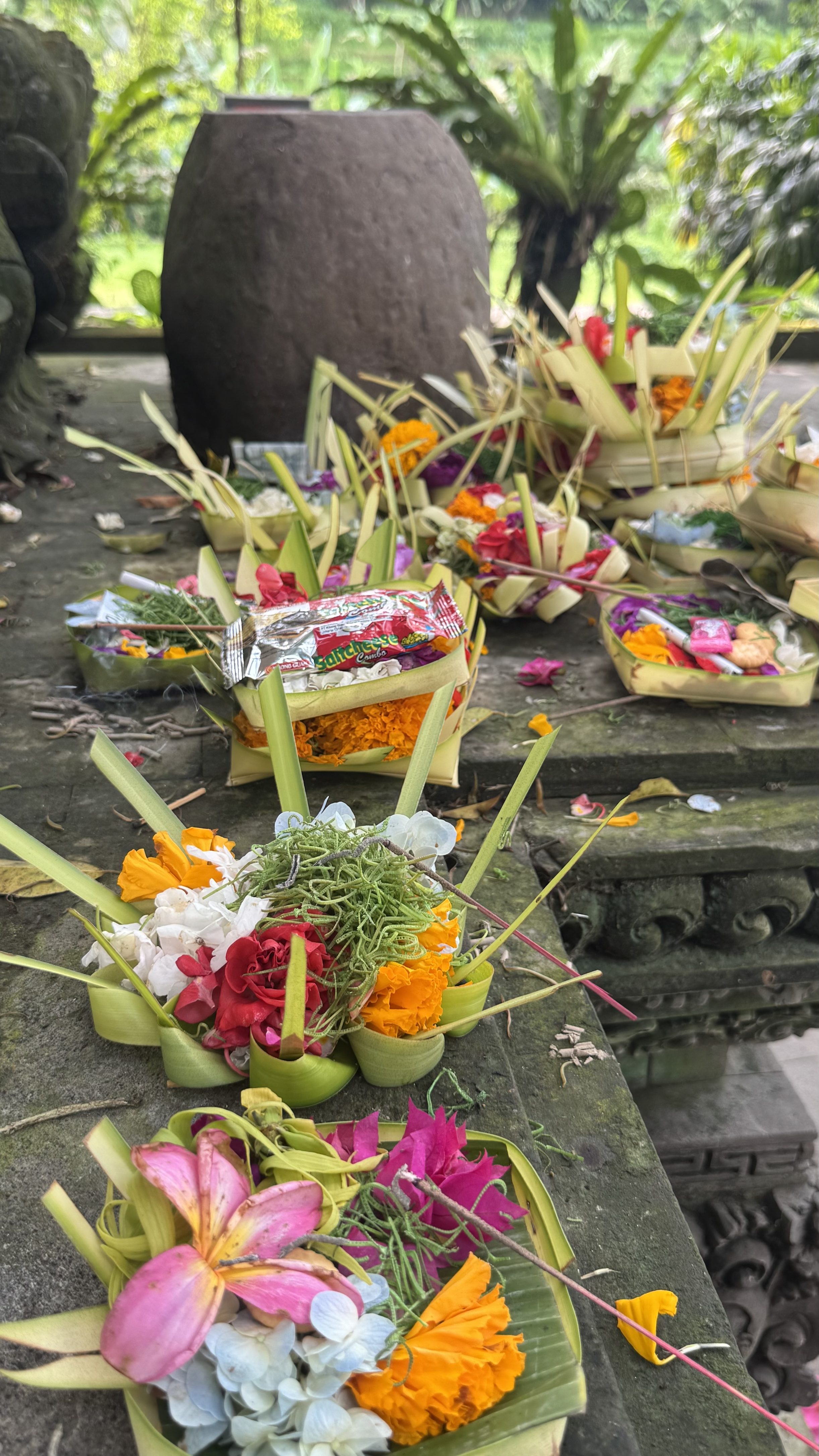
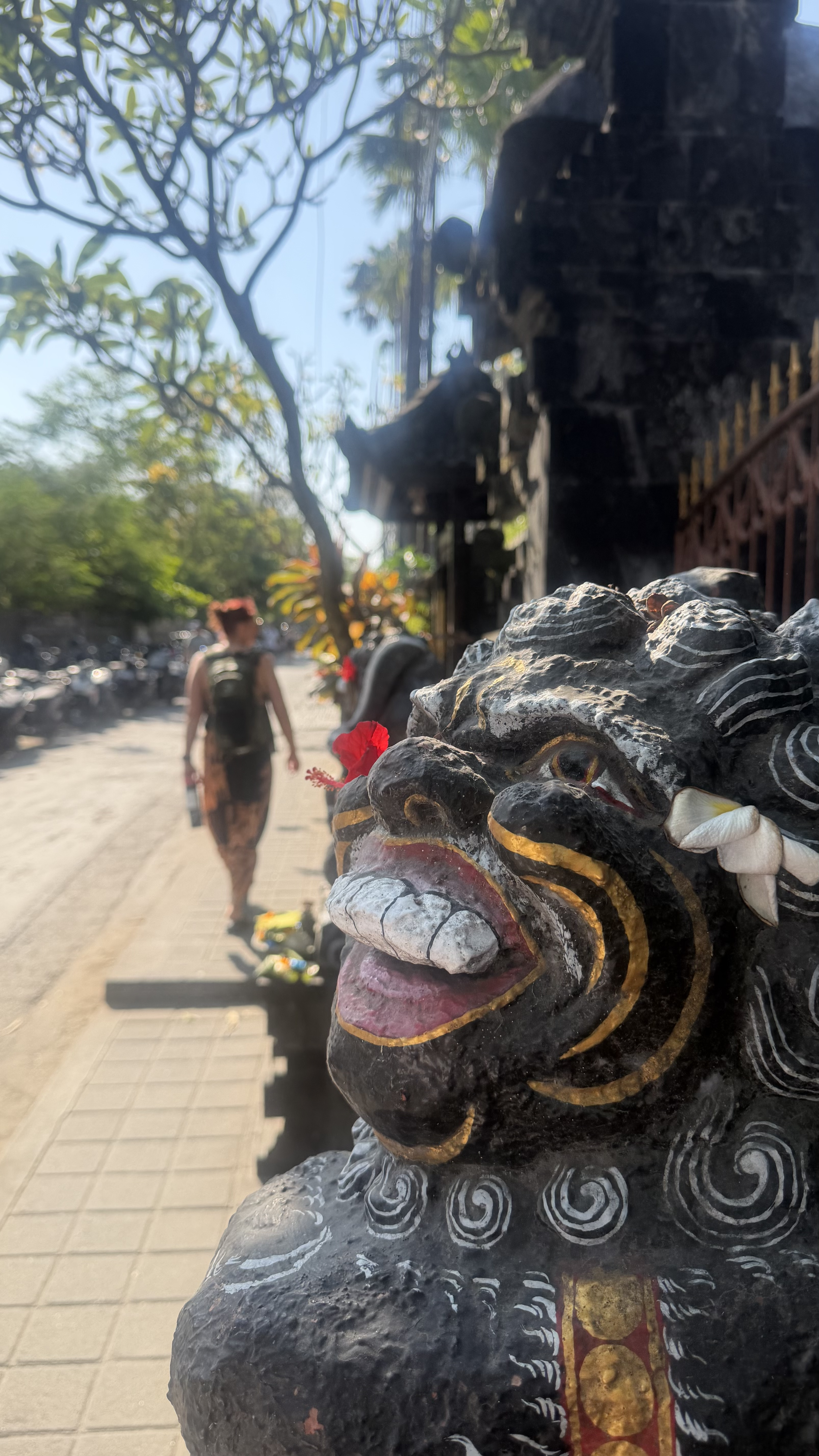
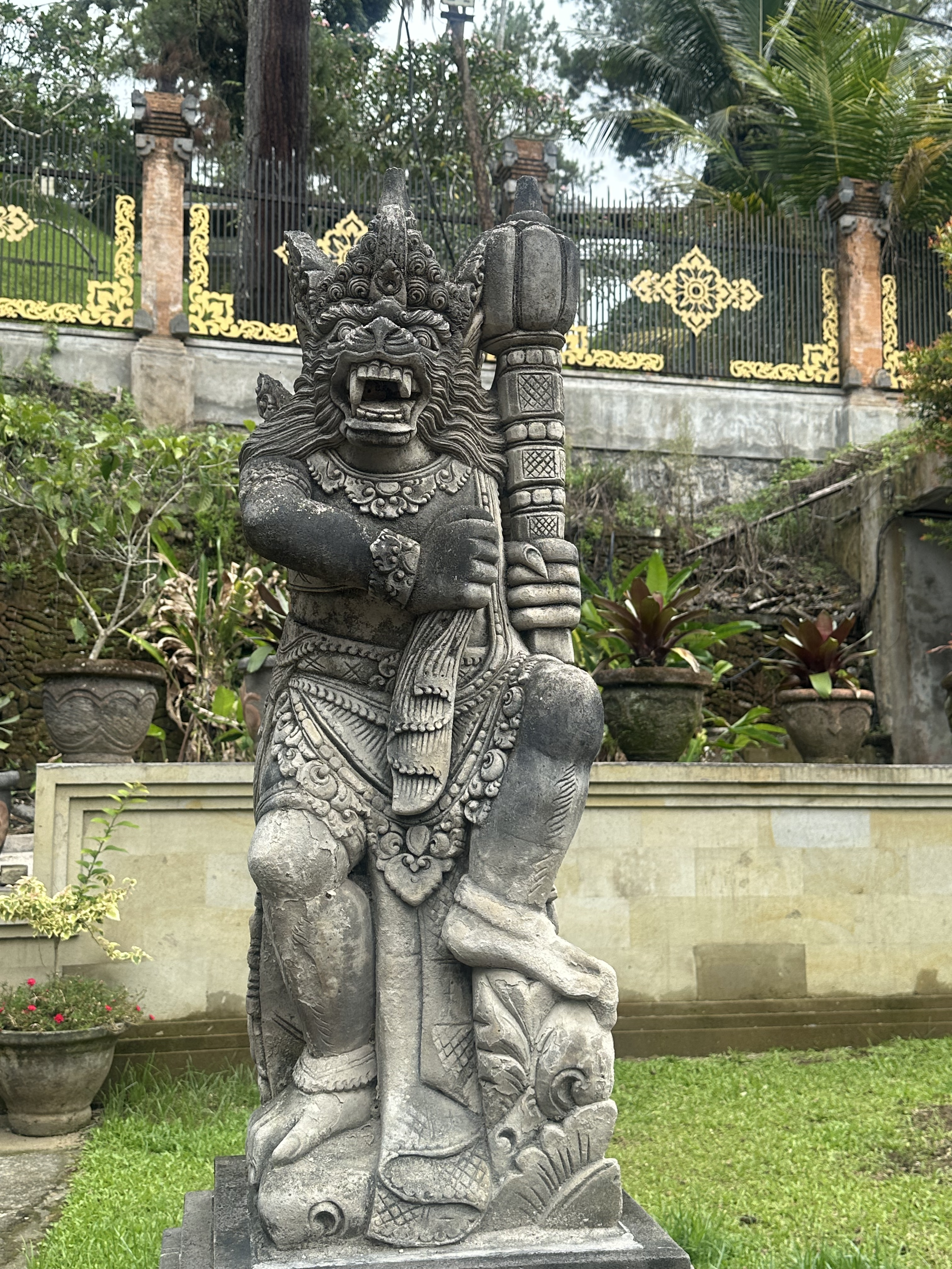
Bali is a deeply spiritual place with the majority of the population practicing Balinese Hinduism. A part of this spirituality is the making of daily offerings. As you travel around Bali you will come across little woven leaf baskets filled with offerings of flowers, rice, crackers/candy and incense. These offerings are placed out on the sidewalk/street in front of homes and businesses as a gesture of gratitude and devotion. Please be respectful and mindful of these offerings and do not step on them, kick them, or otherwise touch them. Yes they are on the sidewalk, yes you will have to adjust your footsteps and maybe even step off the sidewalk but you are expected to go over or around them. If someone is actively setting them out/praying please give them space to do so. The rest of Indonesia is primarily muslim so you will see a lot less offerings.